
How ISO Certification Helps UK SMEs Reach "Approved Supplier" Status
How ISO 9001, and other relevant ISO standards, can support UK SMEs through supplier approval questionnaires, reduce duplicated due diligence, and help you stand out against competitors who can't provide the same independent evidence.
Every UK SME chasing bigger commercial accounts eventually hits the same wall: a corporate buyer needs proof you're a safe pair of hands before they'll even look at your price. Reaching approved supplier status means clearing a supplier approval questionnaire or a supply chain due diligence process — and businesses that can point to relevant, UKAS-accredited ISO certification often find that stage considerably easier to evidence than those starting from scratch.
This isn't red tape for its own sake. Large buyers use these checks to filter out risk before it becomes their problem. Relevant ISO certification, issued by a UKAS-accredited certification body, is one of the most effective ways to provide that evidence — but it's rarely the only requirement, and holding a certificate does not by itself guarantee approved supplier status. What it does is give a buyer recognised, independent evidence of your management controls, which can make the rest of the approval process more straightforward.
IN SHORT
What this article covers
- How corporate supplier approval questionnaires treat ISO certification as strong supporting evidence
- How ISO certification can reduce duplicated due diligence and evidence requests
- Why certified SMEs often present as lower-risk to corporate buyers than uncertified competitors
- What "approved supplier" status actually means, and how to work towards it
The supplier approval hurdle: how buyers use it to weed out businesses
Before signing off on a new supplier, many corporate buyers run a formal approval or pre-qualification stage to check the business is eligible to be considered — regardless of how competitive its quote is. This typically asks for: financial standing, relevant contract references, insurance levels, and — often — evidence of quality, environmental, health & safety, and information security management, depending on the contract. This is where ISO certification can do a lot of the heavy lifting.
Many supplier approval questionnaires score these sections heavily, and where the relevant standard is ISO 9001 or ISO 27001, holding certification issued by a UKAS-accredited certification body gives you a recognised way to evidence that section — rather than submitting a homemade quality manual for a buyer to review, question, and potentially query further.
Without a recognised certificate, you're asked to prove the same thing a different way — usually by supplying policy documents and procedures that a non-specialist evaluator then has to interpret. That route tends to be slower and carries more risk of the submission being queried or bounced back for clarification, compared with pointing to accreditation buyers already recognise.

How ISO certification can reduce supplier due diligence
Large corporations and public bodies are under growing pressure — from regulators, insurers, and their own customers — to prove their entire supply chain is properly managed. The traditional way to do that is a supply chain audit: site visits, document reviews, reference calls, and a manual assessment of how your business actually operates.
That process is expensive and slow for the buyer, which is one reason why ISO certification issued by a UKAS-accredited certification body is valuable to an SME. Where a buyer chooses to accept relevant certification as evidence, it can reduce the amount of additional assessment required and cut down on duplicated document requests, because an independent third party has already assessed those aspects of the management system against a recognised standard. Exactly how much this reduces the buyer's own checks varies by organisation, contract, and sector — most buyers will still carry out some level of their own due diligence alongside it, and certification on its own should not be treated as a substitute for that.
This is one reason supplier pre-qualification platforms used across construction, facilities, and industrial supply chains give management-system certification a prominent place in their assessments — though they typically look at a broader picture than certification alone:
These platforms generally assess a mix of factors — financial standing, health & safety performance, environmental management, insurance, organisational information, and, where relevant, management-system certification. Holding UKAS-accredited ISO certification can strengthen several of these areas at once, but it isn't usually enough on its own to satisfy the whole assessment. A UKAS-accredited certificate can nonetheless give a procurement team a recognised, independent reference point for some of what a manual supply chain audit would otherwise need to verify directly:
| What a supply chain audit checks | Evidence ISO certification can provide |
|---|---|
| Whether your processes are documented and followed | An independently audited quality management system |
| Whether you catch and fix issues systematically | Internal audit trail and nonconformance records |
| Whether your data handling meets a recognised standard | ISO 27001 Statement of Applicability and controls, where held |
| Whether your certification is genuine, not self-declared | UKAS accreditation, checked against the official register |
| Whether the system is still active, not a one-off exercise | Current surveillance audit status |
The competitive edge: looking stable, secure, and low-risk
Beyond supporting compliance sections of a questionnaire, ISO certification can change how a buyer perceives your business next to competitors bidding for the same account. When a corporate procurement lead is comparing two similarly priced SMEs, relevant accredited ISO certification can provide additional assurance — demonstrating established processes, independently assessed controls, and a commitment to internal audit and continual improvement, all evidenced before a single reference call is made.
This matters most exactly where UK SMEs feel it most: trying to reach approved supplier status with a larger corporate account that's consolidating its supply chain around certified partners, or getting past the first commercial gatekeeper before a relationship even has a chance to develop. We cover the financial side of that trade-off in more detail in why you should get ISO 9001 — but the competitive edge alone is often what separates a shortlisted SME from one that never gets a call back.
Certification alone isn't always the whole fix
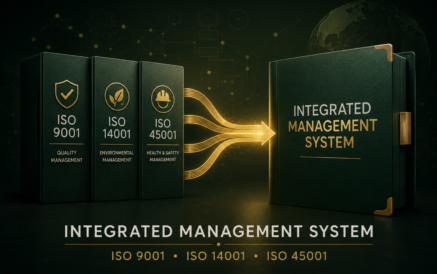
Sometimes the underlying problem isn't the absence of a certificate — it's that certification exists but the systems behind it have drifted, or multiple standards have been implemented separately over time and no longer talk to each other. If your business already holds ISO 9001 but supplier approval checks still flag gaps, it's worth reading our piece on what causes ISO management system fragmentation — a fragmented system is often what's actually behind a failed supplier check, not a missing standard.
How to work towards approved supplier status
- Get a free gap assessment against the standards your target buyers actually ask for — commonly ISO 9001, with ISO 27001, ISO 14001 or ISO 45001 relevant depending on your sector and the contracts you're bidding for.
- Check which supplier approval portals your buyers use, and confirm what evidence each specifically requests — questionnaires aren't identical across Constructionline, Achilles and Avetta, and certification is usually only part of what they assess.
- Build the management system around real operations, not a generic template, so the documentation holds up under an actual audit rather than just a portal upload.
- Keep it maintained after certification, so the next supplier approval check or supply chain audit doesn't catch you out with lapsed evidence.
Frequently asked questions
How do I know if a lost account was actually about supplier approval?
Ask your procurement contact directly — many buyers will confirm if a supplier was excluded at the approval stage, even if it wasn't stated upfront. It's also worth reviewing the pre-qualification requirements for that opportunity against the evidence you actually submitted, to see whether there's a gap in certification or documentation that could explain the outcome.
How does ISO certification help with a supply chain audit?
A UKAS-accredited certificate means an independent third party has already assessed your processes, controls and ongoing compliance against a recognised standard. Where a buyer accepts that as evidence, it can reduce the amount of additional checking they need to do themselves — though most buyers will still carry out some form of their own due diligence, and exactly how much is reduced varies between organisations and contracts.
Is ISO 9001 or ISO 27001 more relevant for reaching approved supplier status?
ISO 9001 is the most commonly requested baseline across almost every sector. ISO 27001 is increasingly requested alongside it wherever the contract involves handling the buyer's data, systems, or customer information, while ISO 14001 (environmental management) and ISO 45001 (health & safety) are often relevant in construction, manufacturing and other higher-risk sectors. Which standards matter most depends on your buyer and the specific contract.
How long before we could realistically bid on a contract that requires ISO 9001?
Most UK SMEs certify in 2 to 6 months from a gap assessment. Our ISO 9001 consultancy service is built around fixed-fee delivery to that kind of timeline, including support with Constructionline, Achilles, Avetta and similar supplier approval portals directly.
Stop losing accounts at the supplier approval stage
If a supplier approval check, supply chain audit, or vendor pre-qualification portal has quietly cost you commercial work, a free gap assessment can help identify what's missing and what needs to happen next.
Book Your Free Discovery CallNo spam. No obligation. We respond within 1 business day.